
If your Wi-Fi feels slow, there is a good chance your router is not the problem. In most homes the real issue is a handful of small mistakes that hold your wireless signal back. In this guide you will learn five free fixes you can apply today to get the fastest possible Wi-Fi speeds from your existing router, often doubling or even tripling performance without buying anything new.
You will see how to place your router in the right spot, pick the best band for your devices, choose the least congested channels, reboot your router the correct way, and keep its firmware up to date for maximum speed and stability.

The most common Wi-Fi mistake is poor router placement. Many routers are tucked behind a television, hidden in a cabinet, dropped on the floor, or pushed into a back corner. That might look tidy, but it is terrible for signal strength.
Wi-Fi signals are weakened by:
Your first fix is simple. Move the router to an open space, keep it around mid height, and place it as close to the center of your home as possible. Avoid hiding it behind a TV, near aquariums, or in a closet. Once the router can broadcast freely, you will often see instant improvements in coverage and speed.
Many devices automatically connect to the 2.4 GHz band because it has been around for a long time and offers longer range. The downside is that it is usually packed with interference from:
To double or even triple your Wi-Fi speeds, move capable devices to the 5 GHz or 6 GHz band. If your phone, laptop, or console is close to the router, connect it to the 5 GHz network name for faster speeds and much less interference.
To use 6 GHz you need a Wi-Fi 6E or Wi-Fi 7 router and devices that support it. Do not worry if you only have a Wi-Fi 5 or Wi-Fi 6 router. The 5 GHz band on those routers is still very fast and is more than enough for gaming, streaming, and work.
Keep in mind that 5 GHz and 6 GHz have shorter range than 2.4 GHz and they struggle more with walls and obstructions. This is another reason to keep the router in a central location so your devices can stay close to it.
Even if you are on the right band, you can still be slowed down by channel congestion. In many neighborhoods multiple routers end up using the same channels, which means they all compete for the same airspace.
To fix this, log in to your router and open the wireless settings or advanced wireless settings. There you should see an option to set the channel for each band.
| Band | Recommended channels | Notes |
|---|---|---|
| 2.4 GHz | 1, 6, or 11 | Use only these non overlapping channels to reduce interference. |
| 5 GHz (lower) | 36, 40, 44, 48 | Good balance of speed and range in many homes. |
| 5 GHz (upper) | 149, 153, 157, 161 | Useful when lower channels are crowded. Often support higher throughput. |
For best results use a Wi-Fi analyzer app or your router built in scanner to see which channels are least congested where you live. Lower channels like 36 often provide better stability and penetration, while higher channels can offer higher top speeds in the right conditions.
Simply changing your Wi-Fi channel can boost speeds significantly, sometimes by 50 percent or more.
Many people know that turning a router off and on again can fix problems, but there is a right way to do it. Quickly tapping a power button may not give the router enough time to fully reset.
Use this method instead:
This deeper restart clears the router memory, resets the Wi-Fi radios, can help with channel congestion, and often resolves small bugs you may not even notice. Doing this about once a month helps keep your Wi-Fi fast and consistent over time.
Router firmware is the software that controls how your router works. Manufacturers frequently release updates that:
Most people never log in to update firmware, which means they miss out on these free improvements. To update yours, log in to the router, open the administration or system section, and look for a firmware update or software update page. Click the button to check for updates and follow the prompts to install the latest version.
If your router offers an automatic firmware update option, enable it. This turns firmware updates into a set it and forget it upgrade that keeps your Wi-Fi as fast, secure, and reliable as possible.
None of these fixes cost anything and most only take a few minutes. Start by moving your router to a better location, then connect your main devices to the 5 GHz or 6 GHz band, change your Wi-Fi channel to a less crowded one, reboot the router the right way, and finish by updating its firmware.
After applying these steps, run a fresh speed test from different rooms to compare before and after results. In many cases you will see a major boost in Wi-Fi speed and stability without touching your internet plan or buying new hardware.
In this video I show you how to get the fastest possible Wi-Fi speeds from your existing router, without buying anything new. If your Wi-Fi feels slow, it is usually being held back by a few small mistakes rather than by the router itself. Fixing these mistakes can double, or even triple, your speeds.
The first fix is all about router placement. In many homes the router is sitting in the worst possible location, such as behind a television, stuffed inside a cabinet, or pushed into a corner like it is in time out. Wi-Fi signals are weakened by walls, metal objects, mirrors, microwaves, and other large obstacles.
To improve your signal quickly, move the router into the open and keep it at about mid height. The ideal position is close to the center of your home so the signal can reach as many rooms as possible. Avoid placing the router behind TVs, near aquariums, next to microwaves, inside closets, or right next to thick walls. Once you move it into a clear central spot, you will usually see an immediate improvement in both coverage and speed.
The second fix focuses on the Wi-Fi band you are using. Many devices connect by default to the 2.4 GHz band, which has more range but is also crowded. Baby monitors, security cameras, garage door openers, microwaves, Bluetooth devices, and a lot of older smart home equipment all share this same band and create interference.
For much faster speeds, connect close by devices to the 5 GHz or 6 GHz band instead. If your phone or laptop is near the router, choose the 5 GHz or 6 GHz network in your Wi-Fi list. To use the 6 GHz band you will need a Wi-Fi 6E or Wi-Fi 7 router and compatible devices. If you only have a Wi-Fi 6 router, the 5 GHz band is still more than fast enough for gaming, streaming, and everyday work.
Remember that 5 GHz and 6 GHz bands do not travel as far as 2.4 GHz and they have a harder time going through walls and other obstacles. This is another reason to keep your router in the center of your home so that devices can stay as close to it as possible.
The third fix is to change your Wi-Fi channel. Even if you are using the right band, your router and your neighbors router may be fighting for the same channel. When multiple routers use the same channel in the same area, they interfere with each other and slow everyone down.
To change this, log in to your router and open the wireless or advanced wireless settings. There you will find an option to choose the channel for each band. For 2.4 GHz you generally want channel 1, 6, or 11. For 5 GHz you can start with channels 36, 40, 44, or 48. If those lower channels are congested, move up to channels 149, 153, 157, or 161.
A Wi-Fi analyzer app or your router built in channel scan can help you see which channels are busiest and which ones are relatively clear. Lower channels such as 36 often give better stability and penetration, while higher channels can offer higher peak speeds. Simply choosing a less congested channel can give you a very noticeable speed boost.
The fourth fix is to restart your router the right way. Many people quickly flip the power switch or unplug the router and plug it right back in. That is better than nothing, but it does not always give the router time to fully reset.
Instead, unplug the router from power and wait a full 30 seconds. This allows the internal capacitors to drain and the hardware to completely power down. Then plug the router back in and wait for it to boot up completely. This deeper restart clears the router memory, resets the wireless radios, helps with channel congestion, and fixes many small bugs that are hard to see. Doing this about once a month helps keep your Wi-Fi running smoothly.
The fifth fix is to update your router firmware. Firmware is the internal software that controls how your router works. Manufacturers regularly release updates that improve Wi-Fi range, fix stability issues, add cleaner channel handling, improve security, and optimize performance on the 5 GHz and 6 GHz bands.
Most people never log in to their router to check for firmware updates, so they miss out on these free upgrades. To update, log in to your router, open the administration or system section, and look for a firmware update page. Click the option to check for updates and then follow the instructions to install the latest version.
If your router offers an automatic firmware update feature, turn it on. With auto update enabled, your router can keep improving over time without you having to remember to check for new versions.
After you have moved your router to a better location, switched devices to the faster bands, chosen a cleaner channel, rebooted the router the right way, and updated the firmware, your Wi-Fi should be noticeably faster and more reliable. These changes are quick, free, and can deliver a big improvement in your everyday internet experience.

Ready to build the perfect home network in 2025? In this step-by-step guide (2025), I\'ll show you exactly how to Build a Home ...

This is the complete TP-Link Omada Switch setup guide for Home Networks or Small Businesses. TP-Link sent us the Jet Stream ...

Get Faster Internet Speeds with these 3 Simple Hacks! Super easy and Free! FLASH SALE!!! NETGEAR Nighthawk 12-Stream ...

Wi-Fi 8 vs Wi-Fi 7: the next Wi-Fi standard isn\'t chasing bigger speed numbers — it\'s fixing the stuff that actually ruins your ...
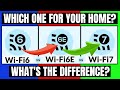
If you are a Home Networking Enthusiast who wants to learn the differences between Wi-Fi 6, Wi-Fi 6E, and Wi-Fi 7 then you are ...

Smaller Wireless Routers have many benefits including the ability to used as travel routers! GL.iNet Official US Store: ...