
The debate between Cat5e and Cat6 has been ongoing for years. Many believe that upgrading to Cat6 automatically boosts internet speed, but is this really true? This guide will break down the key differences between these Ethernet cables and explain why your network hardware plays a bigger role in performance.

| Feature | Cat5e | Cat6 |
|---|---|---|
| Max Speed | 1Gbps | 1Gbps |
| Bandwidth | 100MHz | 250MHz |
| Max Length | 328 feet | 328 feet |
| Shielding | Minimal | Better shielding, reduces crosstalk |
No, your internet speed is determined by your ISP and network hardware. If your internet plan is 1Gbps or less, both Cat5e and Cat6 will provide the same experience.
While both cables support 1Gbps, Cat6 is more effective in reducing interference due to its improved shielding. This makes it a better option for high-density networking environments.
For most home networks, Cat5e is more than enough. If your ISP provides speeds of 1Gbps or less, you won’t notice any improvement with Cat6. Instead, upgrading your router, modem, and network settings will have a much bigger impact.
The debate over Cat5e vs. Cat6 has been growing over the last few years, but does Cat6 really make a difference in home networking?
Most homes and offices use Cat5e, and their internet speeds are just as fast as those using Cat6. The truth is that network speed depends more on your hardware setup rather than the cable itself.
Both Cat5e and Cat6 support 1Gbps speeds, but Cat6 offers higher bandwidth at 250MHz compared to 100MHz for Cat5e. While this helps in reducing interference, it does not directly increase your internet speed.
Upgrading to Cat6 will not make your network magically faster. Instead, network performance is influenced by your router, modem, PC hardware, and network interface card (NIC) settings.
In real-world use cases like streaming Netflix, browsing the web, or torrenting, there is no noticeable difference between Cat5e and Cat6. If you have Cat6 in your home, great—but your neighbor with Cat5e likely has the same speeds.
For those planning to future-proof their home, installing Cat6 is a good idea, but for most users, Cat5e remains a reliable and cost-effective choice.
So, does Cat5e rule the world? When it comes to home networking, the answer is yes.
If you have any questions or think differently, leave a comment! Thanks for watching, and don't forget to like, share, and subscribe!

Welcome back to The Ultimate Tech Hub. On today\'s episode we will connect a Cat6 ethernet cable to a Cat6 Wall Jack and we ...
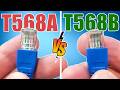
T568A vs T568B. Which one should you choose? How To Wire Both Ethernet Types. Tools and Supplies: Commercial Electric ...

Cat 8 or Fiber for your Home or Business Network? Best Deals On Cat 8 and Fiber Cables: Cat 8 Ethernet Cable 50 ft,1.5ft 6ft 10ft ...

In this episode of Home Networking 101 we will convert a Phone line Jack into a Cat6 data line Jack. Like most new homes we ...

Ready to build the perfect home network in 2025? In this step-by-step guide (2025), I\'ll show you exactly how to Build a Home ...

Welcome back to The Ultimate Tech Hub. On today\'s episode we are switching from Cox Cable to CenturyLink Fiber Optics.