
Explore how a breakthrough idea in the 1970s transformed how we connect. From thick coax cables to today's lightning-fast Cat 8, Ethernet is the unsung hero powering modern internet, streaming, gaming, and smart homes.

In 1973, Bob Metcalfe and his team at Xerox PARC invented Ethernet, inspired by Hawaii’s AlohaNet. Instead of sending data wirelessly, Metcalfe proposed using wires—making communication faster and more reliable.
The first version of Ethernet used thick coaxial cables (dubbed "Thicknet") capable of 2.94 Mbps. Technicians used vampire taps (literally spiked connectors) to connect computers. While groundbreaking, Thicknet was bulky and expensive.
Soon came “Thinnet”—thinner, cheaper coaxial cable—followed by the shift to twisted pair copper cabling. By 1980, Ethernet reached 10 Mbps speeds, and in 1985, CAT 1 twisted-pair copper was adopted. The TIA/EIA-568 standard (1991) and 100BASE-TX (1995) solidified Ethernet's dominance.
Most Ethernet cables support up to 100 meters (328 feet), although high-speed Cat 8 cables are limited to around 30 meters.
While Wi-Fi gets the spotlight in mobile devices, Ethernet remains the MVP for speed, reliability, and low latency. It’s used in:
Today, we have 40+ Gbps Ethernet for supercomputers and data centers. But the next chapter is even more exciting—terabit Ethernet. It promises real-time AI learning, instant downloads, and immersive VR with almost zero latency.
Ethernet's creator, Bob Metcalfe, has received numerous honors including the Turing Award. His work laid the foundation for everything from the internet to AI—and it all started with one powerful idea in 1973.
A single idea in the 1970s changed everything about how we connect. It wasn’t Wi-Fi or the internet—it was Ethernet. In 1973, computers couldn’t communicate easily. Then, at Xerox PARC in California, engineer Bob Metcalfe envisioned a system where computers could instantly communicate via a shared wired network. This led to the creation of Ethernet—the foundation of modern connectivity.
The first versions used thick coaxial cables, known as "Thicknet," and ran at 2.94 Mbps. The cable was yellow and about the width of a thumb. Connections were made using vampire taps—spikes driven into the cable to connect computers. However, Thicknet was expensive, difficult to install, and prone to complete failure if one computer went down.
This led to the creation of Thinnet—thinner, cheaper, and easier to install. By 1980, 10 Mbps Ethernet was standardized. In 1985, CAT 1 twisted-pair copper cabling was introduced. Switching from coaxial to twisted pair copper cables allowed for lighter, more flexible, and easier installations.
By 1991, the TIA/EIA-568 standard introduced structured cabling with CAT 3. In 1995, 100BASE-TX Ethernet was ratified, revolutionizing networks across homes, businesses, and institutions. As of today, over five billion people are connected thanks to decades of Ethernet expansion, including millions of miles of installed cables.
All Ethernet cables—from Cat5e to Cat8—use four twisted pairs of copper wires. These reduce crosstalk and interference. Most use RJ45 connectors, although Cat7 and Cat8 may differ slightly while remaining compatible. Ethernet cables are also backward-compatible. For example, a Cat8 cable will work with a device meant for Cat5e, although performance will be limited to the older device’s capability.
Each Ethernet category (CAT) has speed and distance limitations. Most operate effectively up to 100 meters (328 feet). Higher-speed cables like Cat8 are limited to shorter runs (around 30 meters).
The name “Ethernet” comes from the concept of a shared transmission medium, much like the physical concept of the ether. While Wi-Fi dominates portable devices, Ethernet remains critical for streaming, gaming, cloud storage, and AI systems like ChatGPT. It is the backbone of most modern internet and local networks.
Ethernet has evolved significantly—starting from 100 Mbps Fast Ethernet in the 1990s, to Gigabit Ethernet, then to 10 Gbps, and today to 40+ Gbps Ethernet used in data centers and AI servers. These advancements have made possible everything from real-time video streaming to massive machine learning tasks.
Looking ahead, Terabit Ethernet promises near-instant downloads, immersive virtual reality, and real-time AI learning. Bob Metcalfe’s work earned him the IEEE Medal of Honor, National Medal of Technology and Innovation, and the Turing Award in 2023—the highest honor in computer science.
So next time you plug in an Ethernet cable, know you’re holding a piece of technology that changed the world—and continues to shape its future.

Welcome back to The Ultimate Tech Hub. On today\'s episode we will discuss the best way to determine the prime location for your ...

This is the "Easy Ethernet Wall Jack Installation" that uses a 45-degree Cat6 Keystone Jack from SatMaximum and this is the ...
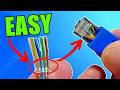
This the BEST way to Wire Up Ethernet Plugs! How to make up CAT5e or CAT6 ethernet cables from scratch using Cat6 RJ45 with ...

This is "How to Fix Slow Ethernet Speeds in 2025! Quick and Easy!" Great Deals on Ethernet Cables: Cable Matters 10Gbps ...

Welcome back to The Ultimate Tech Hub. On today\'s episode we will run an Cat6 Ethernet cable through the wall. Then we will ...

How to wire up Cat6a UTP the easiest and best way! This is a detailed "How-To" video on Cat6a Unshielded Twisted Pair ...