
The Sony LinkBuds Clip combine a lightweight clip-on design, open-ear awareness, secure comfort, long battery life, and Bluetooth multipoint. This review examines their sound, fit, controls, missing features, and whether they justify their $229 price.

Clip-on earbuds have become one of the most noticeable audio trends of 2026. Instead of sealing the ear canal, these earbuds attach to the outer ear and position a small speaker near the ear opening. The design allows music, podcasts, and calls to remain audible while preserving awareness of nearby people, traffic, announcements, and other sounds.
Sony enters this growing category with the LinkBuds Clip, a $229 pair of open-ear earbuds designed for all-day comfort. After more than two months of use during workouts, running, errands, work, and daily listening, the earbuds present a clear mix of strengths and compromises.
| Feature | Sony LinkBuds Clip |
|---|---|
| Design | Open-ear C-shaped clip |
| Price | $229 suggested price |
| Earbud battery life | Up to 9 hours |
| Total battery life | Up to 37 hours with the case |
| Water resistance | IPX4 |
| Noise cancellation | Not included |
| Wireless charging | Not included |
| Multipoint Bluetooth | Supported |
| Best for | Comfort, awareness, workouts, glasses, podcasts, and everyday use |
The compact charging case has a smooth, rounded shape and is available in black, beige, lavender, and green. The earbuds use a C-shaped design with two connected sections. The larger section contains the battery and controls and rests behind the ear. The smaller section contains the speaker and sits near the ear canal without entering it.
A flexible silicone bridge connects the two sections and clips around the outer edge of the ear. Sony also includes small silicone cushion pads that can provide additional support for people with smaller ears.
There is a brief learning curve when putting the earbuds on for the first time. After several attempts, however, the motion becomes natural and takes only a few seconds.
Secure fit is one of the biggest questions surrounding clip-on earbuds. During testing, the LinkBuds Clip remained firmly in place while running, exercising, playing basketball, walking, and completing everyday activities.
The C-shaped bridge grips the outer ear without relying on an in-ear silicone tip. This makes the earbuds especially useful for people whose traditional earbuds become loose or uncomfortable.
The design works particularly well for glasses wearers. Traditional sports earbuds frequently use hooks that wrap over the top of the ear, placing them in the same area as eyeglass frames.
The LinkBuds Clip bridge sits behind the outer ear instead. This allows the earbuds and glasses to coexist without pressing against each other or fighting for space.
The earbuds are made primarily from plastic and silicone. They do not feel poorly constructed, but they also do not provide the premium material feel some buyers may expect at $229.
The lighter materials appear to be a deliberate decision intended to reduce weight. Because these earbuds are worn for extended periods, the comfort advantage may matter more than how luxurious they feel when held.
An IPX4 water-resistance rating protects against sweat and light splashes. The earbuds are suitable for workouts and light rain, but they are not designed for swimming, surfing, or submersion.
The LinkBuds Clip sound good, although they do not deliver the same depth or isolation as premium sealed earbuds. Their 10-millimeter drivers provide clear, midrange-focused sound with better bass than might be expected from an open-ear design.
Open-ear earbuds cannot create a tight seal around the ear canal. As a result, some low-frequency bass is naturally lost. Sony cannot completely eliminate this physical limitation. However, the bass response is strong enough to keep most music from sounding thin or hollow.
The midrange is the strongest part of the sound profile. Vocals, podcasts, audiobooks, and phone conversations sound clear and pleasant. People who primarily listen to spoken-word content may find the tuning particularly satisfying.
Sony includes DSEE audio-processing technology, which attempts to restore some of the detail removed from compressed audio files. The improvement may be subtle when listening to high-quality streaming audio, but it can be more noticeable with lower-bitrate streams or older compressed files.
The Sony Sound Connect app also includes a 10-band equalizer. Listeners who do not enjoy the default tuning can adjust individual frequency ranges and create a more personalized sound profile.
The LinkBuds Clip do not include active noise cancellation. This is not an accidental omission. Their open-ear design is specifically intended to preserve awareness of the surrounding environment.
This can be helpful while walking through a city, exercising outdoors, working in a warehouse, listening for announcements, or remaining available to coworkers. It is far less useful when trying to block out a subway, airplane cabin, loud office, or noisy coffee shop.
Call quality is acceptable in quiet environments. The microphones allow ordinary conversations to take place without major problems.
Performance is less impressive in windy streets, busy coffee shops, and other noisy locations. Background sounds remain noticeable to the person on the other end of the call. The microphones are usable, but they are not one of the product’s strongest features.
Battery life is one of the strongest reasons to consider the LinkBuds Clip. The earbuds provide up to nine hours of playback, while the charging case adds approximately 28 hours. This creates a total of up to 37 hours of listening time.
A three-minute quick charge can provide approximately 60 minutes of playback. This is useful when the earbuds are nearly empty and there is only enough time to charge them while getting ready or making coffee.
The charging case does not support wireless Qi charging. At a $229 price point, this omission is difficult to overlook. The case must be charged through USB-C, and a charging cable is not included.
Playback and volume controls are operated by tapping the silicone bridge. The controls take a day or two to learn but become natural with continued use.
The controls can be customized through the Sony Sound Connect app. The earbuds do not include wear detection, so playback does not automatically pause when they are removed.
Bluetooth 5.3 and multipoint connectivity allow the earbuds to remain connected to a phone and laptop at the same time. A user can pause a video on a laptop, answer a phone call, and have the audio switch devices automatically.
Multipoint works smoothly and becomes difficult to give up once it becomes part of a daily routine.
The LinkBuds Clip are a strong choice for people who:
Consider another pair of earbuds when:
The Bose Ultra Open Earbuds offer a more premium build but cost approximately $100 more. The Anker Soundcore AeroFit Pro provides a similar open-ear experience at a lower price.
Sony sits between those options. It offers better perceived value than the more expensive Bose model while providing stronger sound, app support, and brand reliability than many budget alternatives.
| Option | Primary Advantage | Primary Trade-Off |
|---|---|---|
| Sony LinkBuds Clip | Balanced features, sound, comfort, and app support | No noise cancellation or wireless charging |
| Bose Ultra Open Earbuds | More premium construction | Substantially higher price |
| Anker Soundcore AeroFit Pro | Lower price and strong value | Less refined overall experience |
The Sony LinkBuds Clip are comfortable, secure, practical open-ear earbuds with excellent battery life, useful multipoint connectivity, good app support, and clear performance for voices and everyday listening.
They do not provide active noise cancellation, strong isolation, wireless charging, or the deepest bass. Their plastic construction also feels less premium than the price might suggest.
For listeners who value awareness, glasses compatibility, secure fit, comfort, and all-day battery life, the LinkBuds Clip make a convincing case. For listeners who want to block out the world or achieve the strongest possible audio quality, conventional premium earbuds remain the better option.
0:01: If your router is such a security risk 0:03: that the government had to ban it, then 0:05: why is it okay to keep using it until 0:07: 2027? I've got a theory and it has 0:10: nothing to do with security or hackers. 0:13: Hey everyone, I'm Michael Scott and I've 0:15: been reviewing routers for years. 0:16: Everything from ASUS, Netgear, Tippy 0:19: Link, GIE, and Lynxus. [music] 0:22: And today we're going to expose the true 0:24: reason for the FCC ban on all foreign 0:27: made routers. Let's get into it. 0:35: In March of 2026, the FCC banned the 0:39: import of basically every new consumer 0:41: router not made and built in the United 0:43: States. Not just TPLink, not just 0:46: Chinese-made routers. We're talking 0:48: ASUS, Eero, [music] Google Nest, Lynxis, 0:51: Netgear, Synology, and Ubiquiti. All of 0:54: it. Let me give it to you straight 0:57: because the headlines are built to scare 0:59: you. Here's three things that actually 1:01: matter about this ban. One, the router 1:04: you already own is fine. This is an 1:07: import ban, [music] not a recall. The 1:09: FCC said plainly, "It doesn't touch gear 1:12: you already have. No knock on your door, 1:15: no brick device, and no FBI." Second, 1:18: existing routers keep getting security 1:21: updates until March 1st, 2027. The FCC 1:25: issued the waiver for these updates, so 1:27: you're all good. And third, this is a 1:29: blanket ban, and the wording is broad on 1:31: purpose. It covers routers designed 1:33: abroad and routers designed here, but 1:36: built overseas. This is the part that 1:38: makes the ban suspicious, but we'll get 1:41: there in a minute. First off, I'm not 1:43: going to pretend the security concern 1:45: isn't [music] real. It definitely is. 1:48: Here's the strongest version of the 1:49: government's case. Let's crack it open 1:51: and take a look at it. Your router is 1:53: the front door to your entire digital 1:55: home. Every device talks through this 1:58: one box. We're talking cell phones, 2:00: laptops, desktops, smart devices, you 2:03: name it, it's connected. And the back 2:05: door is a master key to everything. And 2:08: here's the history. The FCC named three 2:10: real cyber campaigns. [music] Vault 2:12: Typhoon, Flax Typhoon, and Salt Typhoon. 2:16: These cyber attacks hit US 2:17: infrastructure between 2024 and 2025. 2:21: Some of these cyber attacks use 2:23: compromised consumer routers as the way 2:25: in. That happened. The FBI also warned 2:28: in March of 2026 about 18 router models 2:31: tied to a malware operation. We're 2:33: talking DLink, Netgear, and TPLink. 2:36: That's not one country. That's the whole 2:38: industry shipping gear that's insecure 2:40: right out of the box. Here's what bugs 2:43: me. If this were purely about security, 2:45: this policy would look way different. 2:47: Here are three problems. First problem, 2:50: if foreign routers are genuinely 2:52: dangerous, why is the government letting 2:55: you keep yours plugged in until 2027? 2:58: Think about it. If your city found lead 2:59: in the water, they wouldn't say, "Stop 3:01: drinking the water, but finish that 3:03: glass you've got." That makes no sense. 3:05: This ban blocks the newest routers, 3:08: which have the latest security updates. 3:10: While older and potentially more 3:12: vulnerable routers stay in millions of 3:14: homes with a free pass. That's not a 3:16: security policy. That's something 3:18: completely different. The second 3:19: problem, it bans companies that aren't 3:21: Chinese at all. For instance, TPLink's 3:24: US Arm is headquartered in Irvine, 3:26: California, and Netgear is in San Jose. 3:28: TPLink builds routers in Vietnam and not 3:31: China. And a huge chunk of this industry 3:33: is made in Vietnam, Taiwan, and South 3:36: Korea, not mainland China. So, why are 3:39: two California companies on the same 3:41: list as everyone else? It's kind of 3:43: suspicious. Third problem. Designed here 3:46: but built abroad still gets you banned. 3:48: That's right. Even though it's designed 3:49: in the US and built abroad, it still 3:52: gets banned. That's not a security test. 3:54: That's a factory location test. And once 3:57: again, this is very suspicious. The tell 3:59: is right there in the text. The SEC ban 4:01: cares more about where the router was 4:03: built than who actually wrote the 4:04: software inside it. And the software is 4:07: where the real security risk lives. 4:09: That's not a safety rule in disguise. 4:11: That's a bring jobs back to America rule 4:14: in disguise. And to be clear, I don't 4:16: have a problem with that. Just be honest 4:18: about it. [music] If the FCC ban isn't 4:20: only about security, then what's the 4:22: prize? We're talking about money. 4:24: Billions of dollars. The US wireless 4:26: router market was about $3.8 billion in 4:29: 2025, projected to roughly 9.2 billion 4:32: by 2035. Globally, the Wi-Fi router 4:35: market is around $16 billion in 2026 and 4:38: heading past 26 billion by 2031. Do you 4:42: see where I'm going here? The broader 4:44: router market topped $24 billion in 2026 4:47: with North America alone accounting 4:49: [music] for 8.3 billion of it. This is a 4:52: huge growing and reoccurring market 4:54: because everyone replaces the router 4:56: every few years. And who's been getting 4:58: the biggest slice of that pie? TPLink. 5:02: TPLink alone is estimated at 50 to 65% 5:05: of the US home router market. It's the 5:08: bestselling brand on Amazon and they are 5:10: the cheapest by far. Industrywide, 5:13: foreignade gear is about 70% of the US 5:16: home market. Imagine you're in charge 5:18: and you're looking at a multi-billion 5:20: dollar industry where almost all the 5:22: money ends up overseas. One rule built 5:25: in America and suddenly all that 5:27: spending stays home. That's a very 5:29: attractive pinstroke if you're a policy 5:31: maker. We're talking factories on soil, 5:34: manufacturing jobs, payroll, and 5:36: corporate taxes recirculating at home. 5:38: The Security Review is the legal 5:40: vehicle, and it's one of the few clean 5:42: ways to justify a sweeping import ban 5:45: without calling it a tariff, and that's 5:47: pretty sneaky. Now, to be fair, a 5:49: defender would say the factory is the 5:51: threat service since a back door lives 5:53: in the [music] hardware. And this waiver 5:55: is just humane. So 70% of the country 5:58: isn't offline tomorrow. And that's a 5:59: fair point. I just don't think it 6:01: explains banning the American design 6:03: brands, which brings me back to the 6:05: router on my desk. My reasoning, and 6:08: this is me and not advice for your exact 6:11: situation, I'm keeping my router and I'm 6:13: not worried about it. It's legal. The 6:15: SEC was explicit. Using what you own is 6:17: fine. It still gets security updates 6:19: through March 1st, 2027. So the biggest 6:22: security argument is covered for now. 6:24: And remember, basic security keeps you 6:27: safe. Change your default admin 6:28: password, change your Wi-Fi password, 6:31: keep the firmware updated, and turn off 6:33: remote management if you don't use it. 6:35: And most people don't. A well patched 6:37: and well-configured router beats a shiny 6:40: made in the USA box you set up with a 6:42: password still on admin. [music] And 6:44: remember, most real compromises walk 6:46: through the unlock front door and not 6:48: the movie villain back door. I'm not 6:50: panic buying. When my harbor actually 6:52: dies, I'll see what's on the shelves 6:54: then. And if this policy works as 6:56: designed, there should be more US-built 6:57: options by then. That might be a good 7:00: thing, but only time will tell. Let's 7:02: just be honest why this ban is 7:04: happening. So, that's where I land. The 7:06: threat is real. The typhoon attacks 7:08: happened, but a security only policy 7:11: doesn't keep the old boxes plugged in, 7:12: doesn't ban California companies, and 7:14: doesn't write the rule around where the 7:16: factory sits. Look where the money goes. 7:19: billions of dollars every year flowing 7:20: out of the country to foreign 7:22: manufacturers. Bringing that money back 7:24: to America makes a lot of financial 7:26: sense. And honestly, that probably has 7:28: as much to do with this ban as any 7:30: security concern does. It's likely both 7:32: things at once, security and economics. 7:35: And probably economics is the main 7:37: driver. And I think it's okay to say 7:38: that out loud. So guys and gals, comment 7:41: below. What do you think? Am I wrong, 7:44: right, or somewhere in the middle? Are 7:45: you keeping your router or switching? A 7:48: huge thank you to all our YouTube 7:49: members and Patreon supporters. Thank 7:51: you for watching and being a part of our 7:53: community. Remember, $2 a month gets you 7:56: free tech support questions and 7:57: automatic entry into any giveaways. So, 8:00: guys and gals, make sure to like, share, 8:02: and subscribe [music] and help me get to 8:04: 100,000 subscribers because I'm almost 8:06: there. Almost that close. I'll see you 8:10: in the next video real soon. 0:01: If your router is such a security risk 0:03: that the government had to ban it, then 0:05: why is it okay to keep using it until 0:07: 2027? I've got a theory and it has 0:10: nothing to do with security or hackers. 0:13: Hey everyone, I'm Michael Scott and I've 0:15: been reviewing routers for years. 0:16: Everything from ASUS, Netgear, Tippy 0:19: Link, GIE, and Lynxus. [music] 0:22: And today we're going to expose the true 0:24: reason for the FCC ban on all foreign 0:27: made routers. Let's get into it. 0:35: In March of 2026, the FCC banned the 0:39: import of basically every new consumer 0:41: router not made and built in the United 0:43: States. Not just TPLink, not just 0:46: Chinese-made routers. We're talking 0:48: ASUS, Eero, [music] Google Nest, Lynxis, 0:51: Netgear, Synology, and Ubiquiti. All of 0:54: it. Let me give it to you straight 0:57: because the headlines are built to scare 0:59: you. Here's three things that actually 1:01: matter about this ban. One, the router 1:04: you already own is fine. This is an 1:07: import ban, [music] not a recall. The 1:09: FCC said plainly, "It doesn't touch gear 1:12: you already have. No knock on your door, 1:15: no brick device, and no FBI." Second, 1:18: existing routers keep getting security 1:21: updates until March 1st, 2027. The FCC 1:25: issued the waiver for these updates, so 1:27: you're all good. And third, this is a 1:29: blanket ban, and the wording is broad on 1:31: purpose. It covers routers designed 1:33: abroad and routers designed here, but 1:36: built overseas. This is the part that 1:38: makes the ban suspicious, but we'll get 1:41: there in a minute. First off, I'm not 1:43: going to pretend the security concern 1:45: isn't [music] real. It definitely is. 1:48: Here's the strongest version of the 1:49: government's case. Let's crack it open 1:51: and take a look at it. Your router is 1:53: the front door to your entire digital 1:55: home. Every device talks through this 1:58: one box. We're talking cell phones, 2:00: laptops, desktops, smart devices, you 2:03: name it, it's connected. And the back 2:05: door is a master key to everything. And 2:08: here's the history. The FCC named three 2:10: real cyber campaigns. [music] Vault 2:12: Typhoon, Flax Typhoon, and Salt Typhoon. 2:16: These cyber attacks hit US 2:17: infrastructure between 2024 and 2025. 2:21: Some of these cyber attacks use 2:23: compromised consumer routers as the way 2:25: in. That happened. The FBI also warned 2:28: in March of 2026 about 18 router models 2:31: tied to a malware operation. We're 2:33: talking DLink, Netgear, and TPLink. 2:36: That's not one country. That's the whole 2:38: industry shipping gear that's insecure 2:40: right out of the box. Here's what bugs 2:43: me. If this were purely about security, 2:45: this policy would look way different. 2:47: Here are three problems. First problem, 2:50: if foreign routers are genuinely 2:52: dangerous, why is the government letting 2:55: you keep yours plugged in until 2027? 2:58: Think about it. If your city found lead 2:59: in the water, they wouldn't say, "Stop 3:01: drinking the water, but finish that 3:03: glass you've got." That makes no sense. 3:05: This ban blocks the newest routers, 3:08: which have the latest security updates. 3:10: While older and potentially more 3:12: vulnerable routers stay in millions of 3:14: homes with a free pass. That's not a 3:16: security policy. That's something 3:18: completely different. The second 3:19: problem, it bans companies that aren't 3:21: Chinese at all. For instance, TPLink's 3:24: US Arm is headquartered in Irvine, 3:26: California, and Netgear is in San Jose. 3:28: TPLink builds routers in Vietnam and not 3:31: China. And a huge chunk of this industry 3:33: is made in Vietnam, Taiwan, and South 3:36: Korea, not mainland China. So, why are 3:39: two California companies on the same 3:41: list as everyone else? It's kind of 3:43: suspicious. Third problem. Designed here 3:46: but built abroad still gets you banned. 3:48: That's right. Even though it's designed 3:49: in the US and built abroad, it still 3:52: gets banned. That's not a security test. 3:54: That's a factory location test. And once 3:57: again, this is very suspicious. The tell 3:59: is right there in the text. The SEC ban 4:01: cares more about where the router was 4:03: built than who actually wrote the 4:04: software inside it. And the software is 4:07: where the real security risk lives. 4:09: That's not a safety rule in disguise. 4:11: That's a bring jobs back to America rule 4:14: in disguise. And to be clear, I don't 4:16: have a problem with that. Just be honest 4:18: about it. [music] If the FCC ban isn't 4:20: only about security, then what's the 4:22: prize? We're talking about money. 4:24: Billions of dollars. The US wireless 4:26: router market was about $3.8 billion in 4:29: 2025, projected to roughly 9.2 billion 4:32: by 2035. Globally, the Wi-Fi router 4:35: market is around $16 billion in 2026 and 4:38: heading past 26 billion by 2031. Do you 4:42: see where I'm going here? The broader 4:44: router market topped $24 billion in 2026 4:47: with North America alone accounting 4:49: [music] for 8.3 billion of it. This is a 4:52: huge growing and reoccurring market 4:54: because everyone replaces the router 4:56: every few years. And who's been getting 4:58: the biggest slice of that pie? TPLink. 5:02: TPLink alone is estimated at 50 to 65% 5:05: of the US home router market. It's the 5:08: bestselling brand on Amazon and they are 5:10: the cheapest by far. Industrywide, 5:13: foreignade gear is about 70% of the US 5:16: home market. Imagine you're in charge 5:18: and you're looking at a multi-billion 5:20: dollar industry where almost all the 5:22: money ends up overseas. One rule built 5:25: in America and suddenly all that 5:27: spending stays home. That's a very 5:29: attractive pinstroke if you're a policy 5:31: maker. We're talking factories on soil, 5:34: manufacturing jobs, payroll, and 5:36: corporate taxes recirculating at home. 5:38: The Security Review is the legal 5:40: vehicle, and it's one of the few clean 5:42: ways to justify a sweeping import ban 5:45: without calling it a tariff, and that's 5:47: pretty sneaky. Now, to be fair, a 5:49: defender would say the factory is the 5:51: threat service since a back door lives 5:53: in the [music] hardware. And this waiver 5:55: is just humane. So 70% of the country 5:58: isn't offline tomorrow. And that's a 5:59: fair point. I just don't think it 6:01: explains banning the American design 6:03: brands, which brings me back to the 6:05: router on my desk. My reasoning, and 6:08: this is me and not advice for your exact 6:11: situation, I'm keeping my router and I'm 6:13: not worried about it. It's legal. The 6:15: SEC was explicit. Using what you own is 6:17: fine. It still gets security updates 6:19: through March 1st, 2027. So the biggest 6:22: security argument is covered for now. 6:24: And remember, basic security keeps you 6:27: safe. Change your default admin 6:28: password, change your Wi-Fi password, 6:31: keep the firmware updated, and turn off 6:33: remote management if you don't use it. 6:35: And most people don't. A well patched 6:37: and well-configured router beats a shiny 6:40: made in the USA box you set up with a 6:42: password still on admin. [music] And 6:44: remember, most real compromises walk 6:46: through the unlock front door and not 6:48: the movie villain back door. I'm not 6:50: panic buying. When my harbor actually 6:52: dies, I'll see what's on the shelves 6:54: then. And if this policy works as 6:56: designed, there should be more US-built 6:57: options by then. That might be a good 7:00: thing, but only time will tell. Let's 7:02: just be honest why this ban is 7:04: happening. So, that's where I land. The 7:06: threat is real. The typhoon attacks 7:08: happened, but a security only policy 7:11: doesn't keep the old boxes plugged in, 7:12: doesn't ban California companies, and 7:14: doesn't write the rule around where the 7:16: factory sits. Look where the money goes. 7:19: billions of dollars every year flowing 7:20: out of the country to foreign 7:22: manufacturers. Bringing that money back 7:24: to America makes a lot of financial 7:26: sense. And honestly, that probably has 7:28: as much to do with this ban as any 7:30: security concern does. It's likely both 7:32: things at once, security and economics. 7:35: And probably economics is the main 7:37: driver. And I think it's okay to say 7:38: that out loud. So guys and gals, comment 7:41: below. What do you think? Am I wrong, 7:44: right, or somewhere in the middle? Are 7:45: you keeping your router or switching? A 7:48: huge thank you to all our YouTube 7:49: members and Patreon supporters. Thank 7:51: you for watching and being a part of our 7:53: community. Remember, $2 a month gets you 7:56: free tech support questions and 7:57: automatic entry into any giveaways. So, 8:00: guys and gals, make sure to like, share, 8:02: and subscribe [music] and help me get to 8:04: 100,000 subscribers because I'm almost 8:06: there. Almost that close. I'll see you 8:10: in the next video real soon.

Welcome back to Ultimate Tech Hub. On todays episode of Ultimate Unboxing we will look at the Powerbeats Pro wireless ...
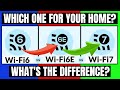
If you are a Home Networking Enthusiast who wants to learn the differences between Wi-Fi 6, Wi-Fi 6E, and Wi-Fi 7 then you are ...

This is the Viper V560 Gaming Mouse Review. In this video I Unbox and test the V560. At Ultimate Tech Hub we give honest and ...

If your in the market for a Budget QLED then this is the video to watch! This is the SAMSUNG Q60CD QLED SMART TV priced at ...

How To Install a NAS The Easy Way! ( Network Attached Storage ) in 10 Easy Steps! TERRAMASTER F4 SSD NAS, 4 Bay All M.2 ...

Welcome back to another episode of the Ultimate Tech Hub. Today we are reviewing and unboxing a 3MP 1080p PTZ Camera ...